
Why INCONTEXTABLE Exists
Making Knowledge Work

If your organization has more data than ever but less sense than ever, you aren't imagining it.
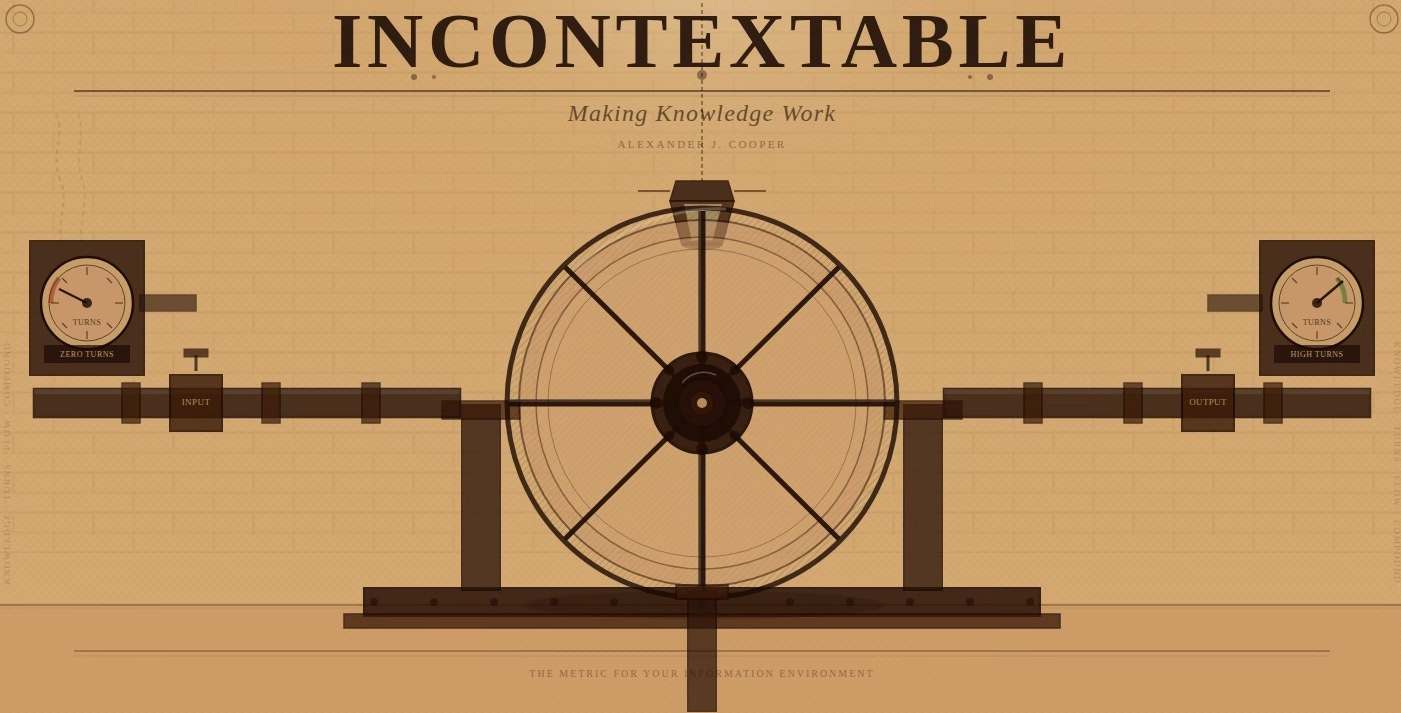
The problem isn't information. Organizations have more of it than they can process. The problem is that almost none of it completes a Knowledge Turn.
A Knowledge Turn is what happens when understanding actually moves — from the person who has it to the person who needs it, at the right time, in a form that changes what they know and therefore what they decide. It is the difference between information stored and knowledge used. Most organizations have the first and almost none of the second.
Every tool in the modern enterprise was designed around storing and retrieving information. None of them were designed around whether understanding actually moves. The filing cabinet was the original knowledge management system. SharePoint is a more expensive filing cabinet. The AI layer being sold right now is a faster filing cabinet with better search.
The knowledge flow problem stays invisible because it doesn't show up on any dashboard. The metrics measure what was stored, what was sent, how fast it arrived. Not whether anyone understood anything differently as a result.
That is what this publication is about.
What You'll Find Here
Each issue examines one aspect of the knowledge flow problem — where it breaks down, what organizations have done to redesign for it, and what a different set of questions would produce.
A recurring feature — K-TIP: Knowledge Turns in Practice — looks at one specific organization and one specific practice that redesigned how knowledge flows rather than how information is stored.
The argument runs across every industry and every kind of organization. The tool vendors won't make it because it questions the premise of what they're selling. That's reason enough to make it here.